
Next generation bioplastics belong in everyday making. Polyhydroxyalkanoates (PHA) are produced by microorganisms through fermentation and can biodegrade under suitable conditions. We developed TraceMatter™, our PHA 3D printing filament, to make this material route easier to use in FDM 3D printing, as part of our ambition to reduce persistent plastic pollution.
Our finished vase in Seaweed Green PHA filament. Photograph: SoftTrace Studio.
Ease of use starts with the formulation. We develop our filament to balance natural texture with steady extrusion, considering filler content and particle size alongside melt flow and nozzle compatibility. As we refine the formulation, we also focus on even filler dispersion, consistent filament diameter, and raw-material drying and moisture control.
The PHA 3D-printing material at the core of TraceMatter holds third-party certification for home compostability and biodegradation in seawater.
Our PHA printing settings
The PHA in TraceMatter is naturally hydrophobic. Under normal, dry storage conditions, our filament usually needs no pre-drying. We printed this Seaweed Green vase directly on a Bambu Lab A1, using our Bambu Studio settings below.
Printer & nozzle: Bambu Lab A1 · 0.4 mm
Filament: TraceMatter PHA filament · Seaweed Green · 1.75 mm
Slicer & mode: Bambu Studio · Vase mode
Nozzle temperature: 210°C
Build plate: Bambu Lab Cool Plate SuperTack · 35°C
Preparing your print
To reduce warping, keep the base firmly attached to the build plate. In our studio, applying glue to a suitable plate or using the Cool Plate SuperTack has improved adhesion.
If high humidity affects print quality or causes popping during extrusion, follow our printing guide: dry the filament at 65°C for 4 hours.
Use our starter project for settings from our studio print tests. Unzip the download and open the .3MF in Bambu Studio, then calibrate for your printer and environment.
From a Blender model to a printed vase
We modelled the vase in Blender, with four rounded sections joined by continuous vertical fluting, then sliced it in vase mode.
The vase model and Geometry Nodes workspace in Blender. Screenshot: SoftTrace Studio.
Bambu Studio estimates 2 hours 9 minutes in total and 41.97 g of filament (13.85 m) for this setup.
The vase sliced in Bambu Studio. Time and filament figures are slicer estimates. Screenshot: SoftTrace Studio.
A surface shaped by seaweed
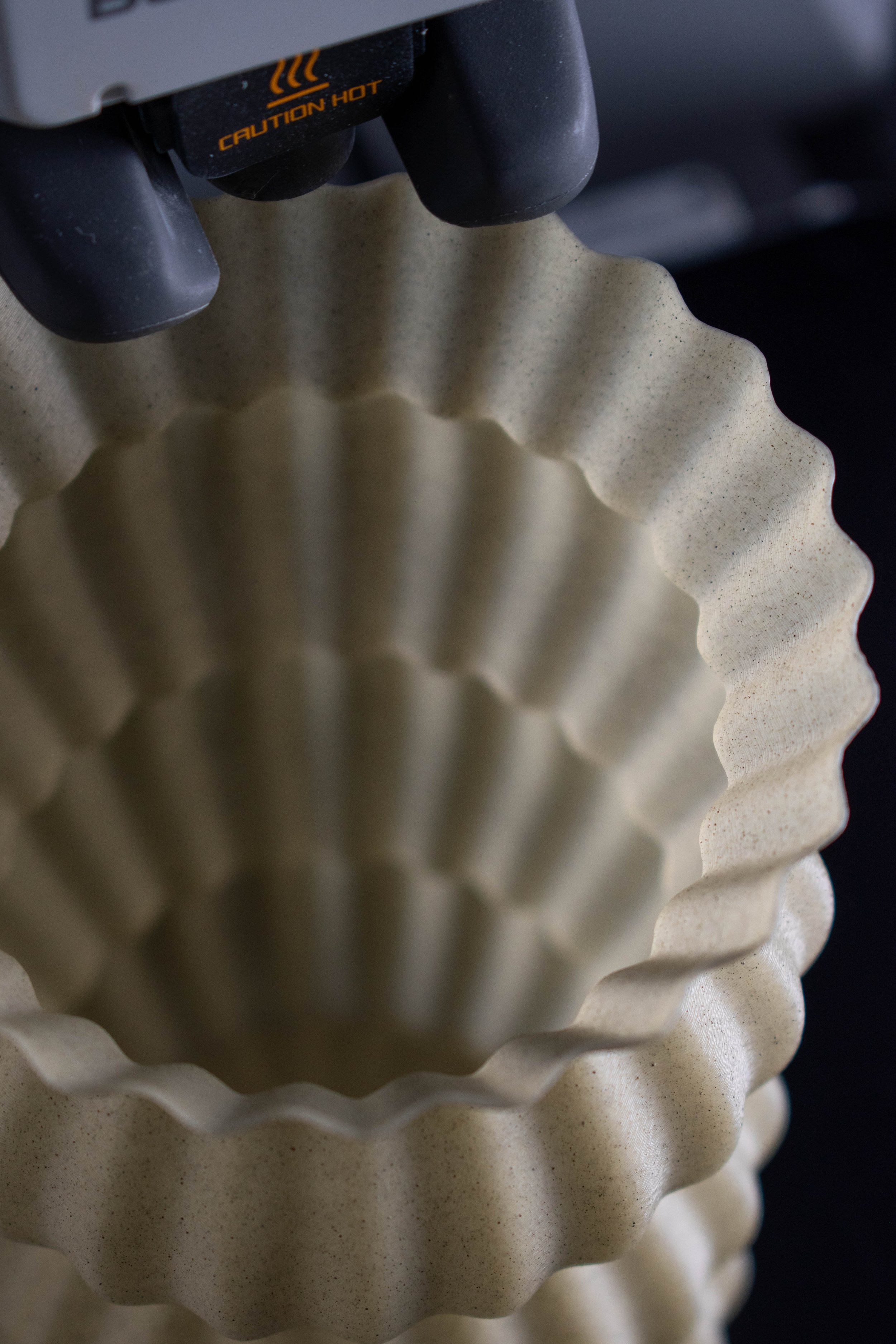
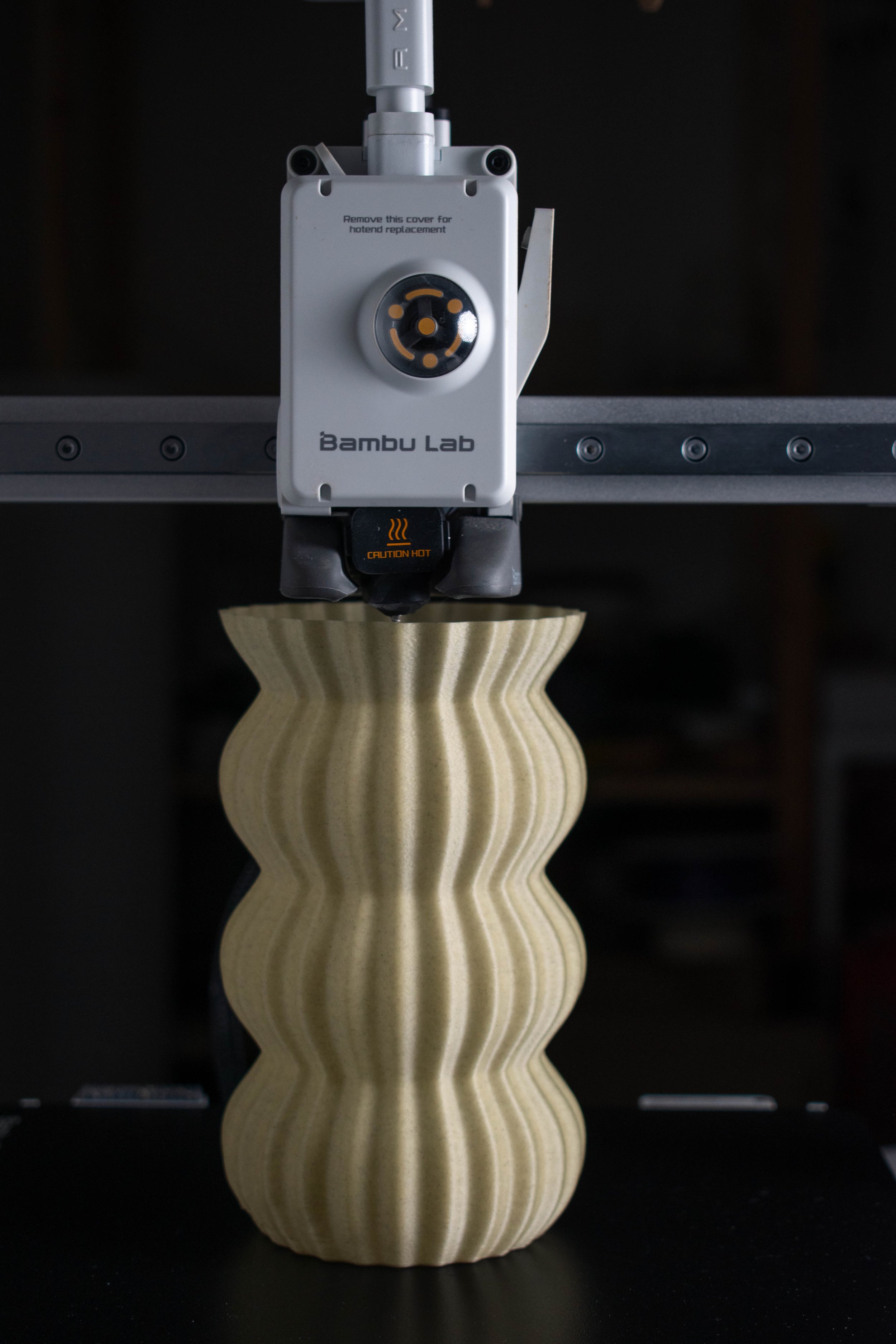
Seaweed particles around the scalloped rim (left), and the vase printing on our Bambu Lab A1 (right). Photographs: SoftTrace Studio.
Seaweed Green contains seaweed residue, visible as fine particles around the rim and through the printed walls. The soft matte finish diffuses reflections across the curves, while the continuous fluting gives the vase its shape.
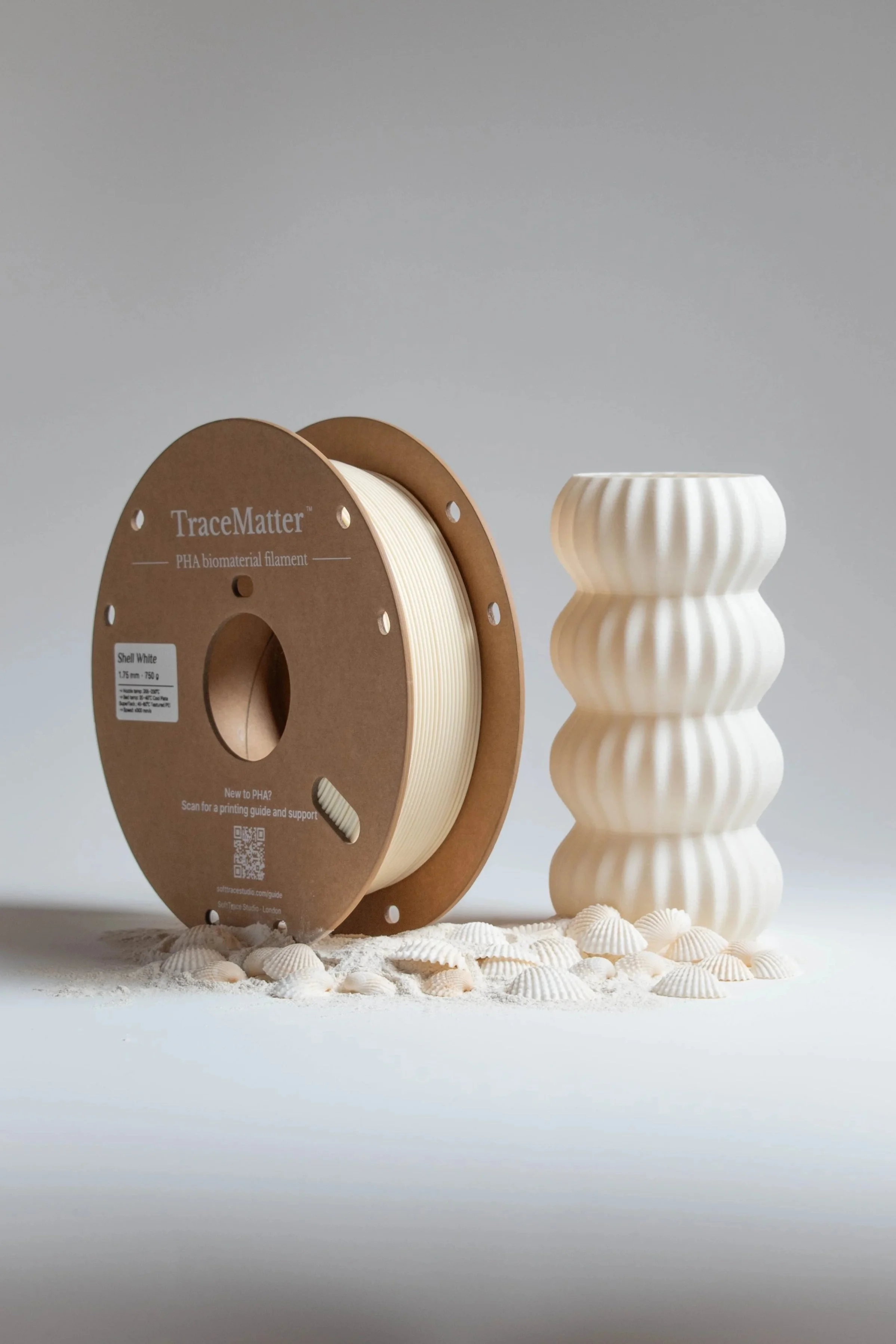
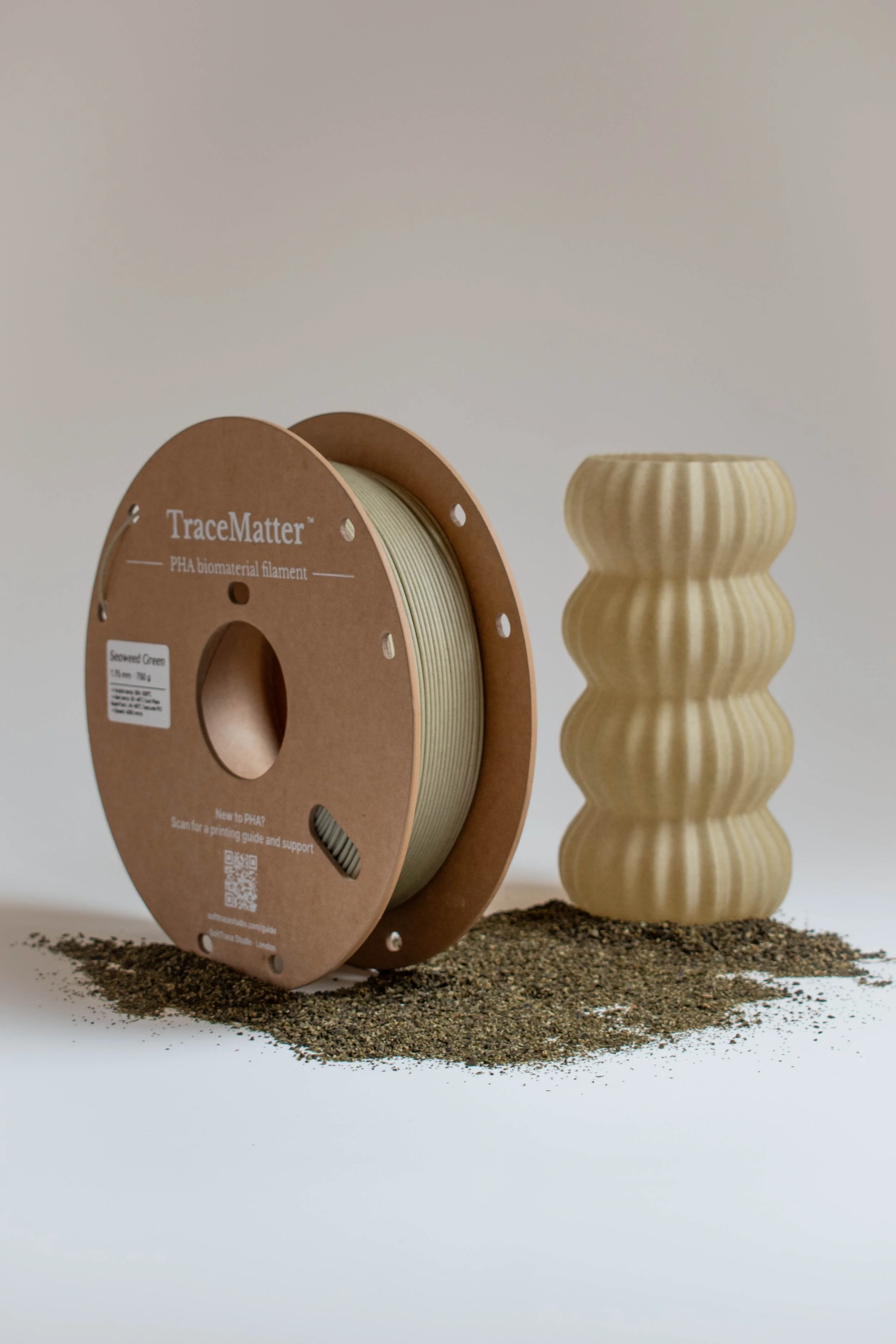
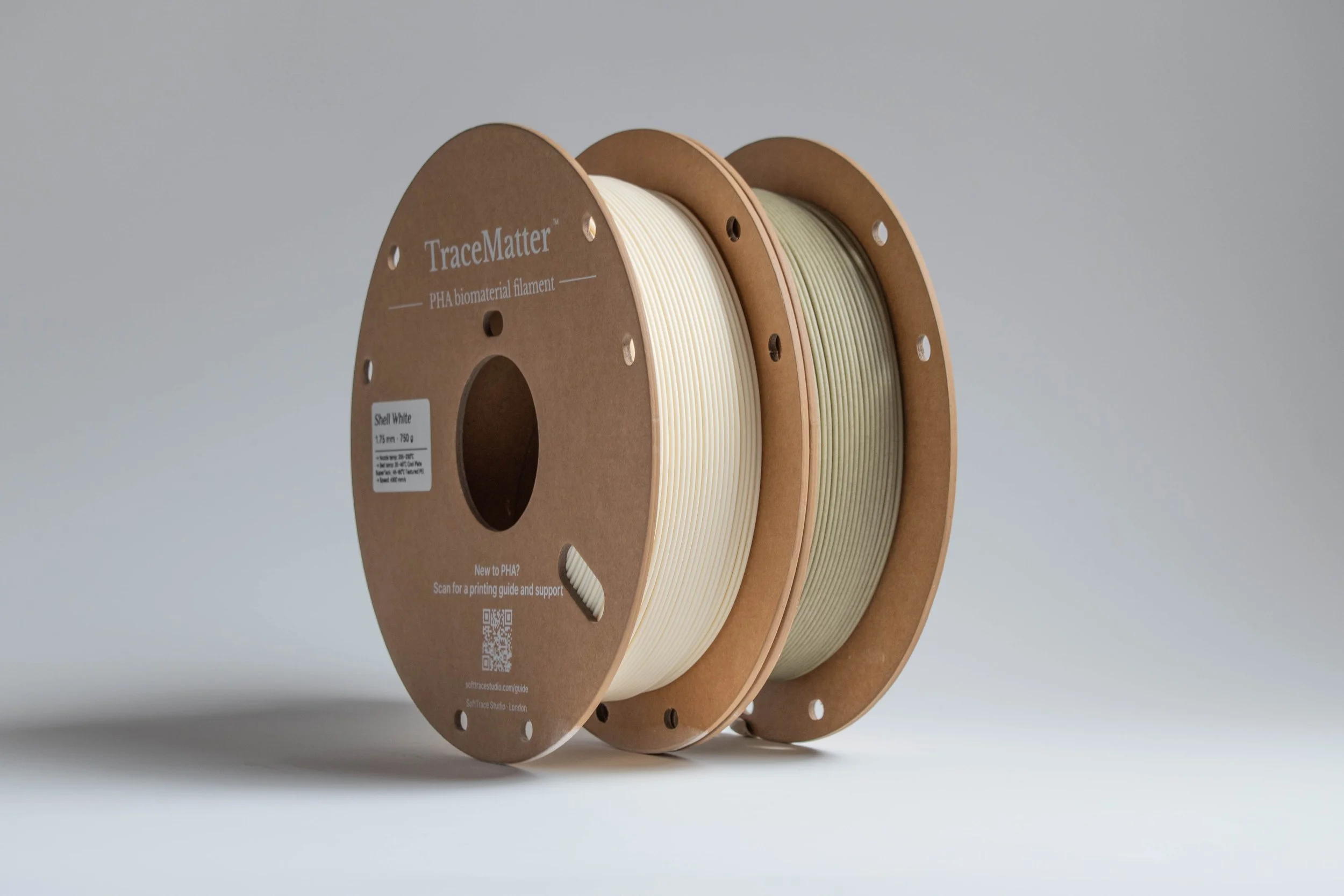
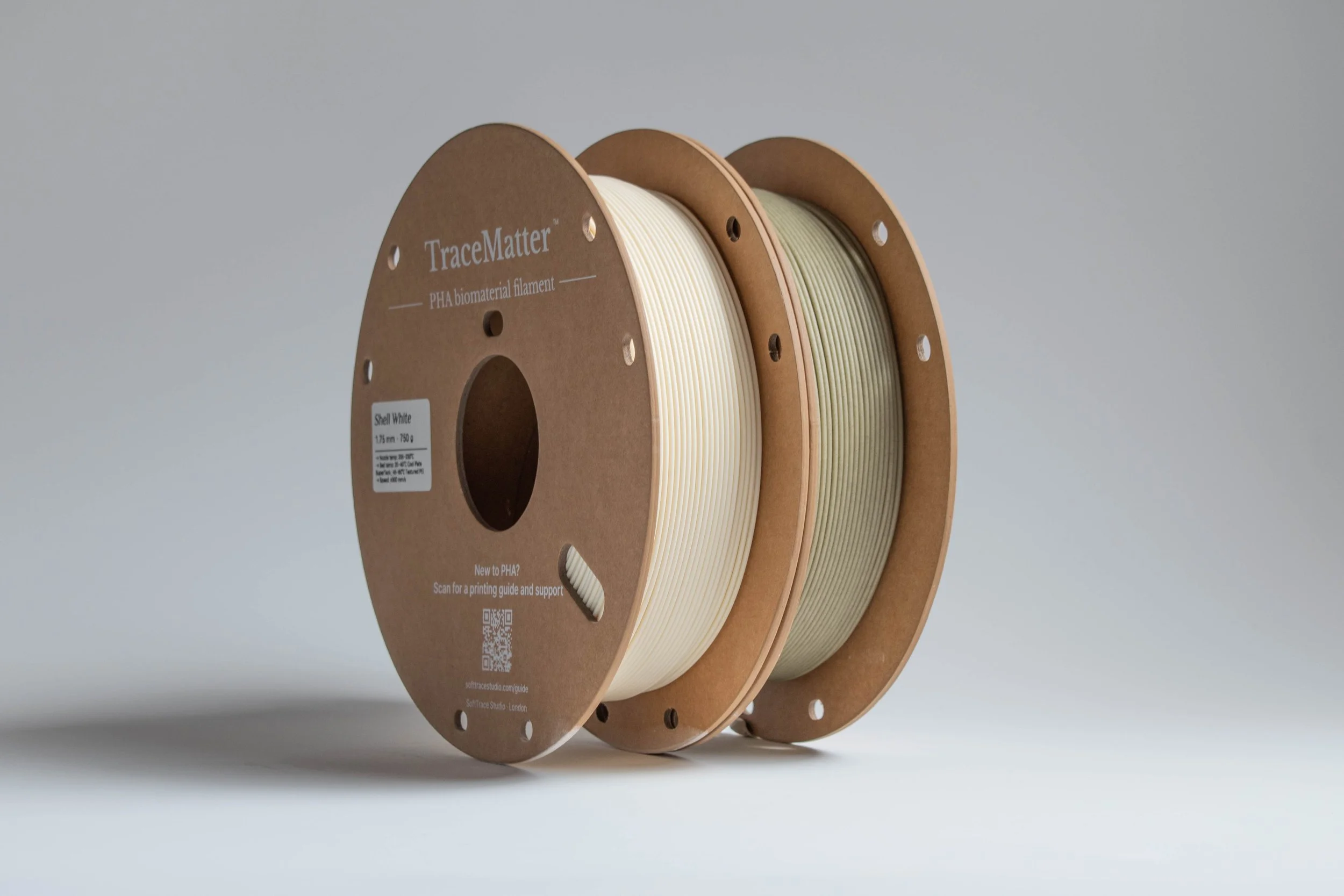
TraceMatter™ is SoftTrace Studio's PHA-based biocomposite filament for FDM 3D printing. This 750 g spool is available in Shell White, made with finely processed shell powder, and Seaweed Green, made with seaweed residue.
Two 750 g spools for £60. Select a 2-pack from the Colour menu and save £4.
Free standard UK delivery on orders of 4 or more.
Ordering 10 or more? Contact us for studio/trade pricing before checkout.
New to PHA? Visit our official printing guide for starting settings, a downloadable starter file with prepared print settings, and direct access to printing support. Check the file's printer and slicer compatibility before printing, and calibrate for your own machine and conditions.
